Play Eighteens Solitaire Online for Free (No Signup Required)
Clear a lone ace or a face card plus three number cards that total eighteen, refill from the stock, and see if luck is on your side: just a 10% win rate.
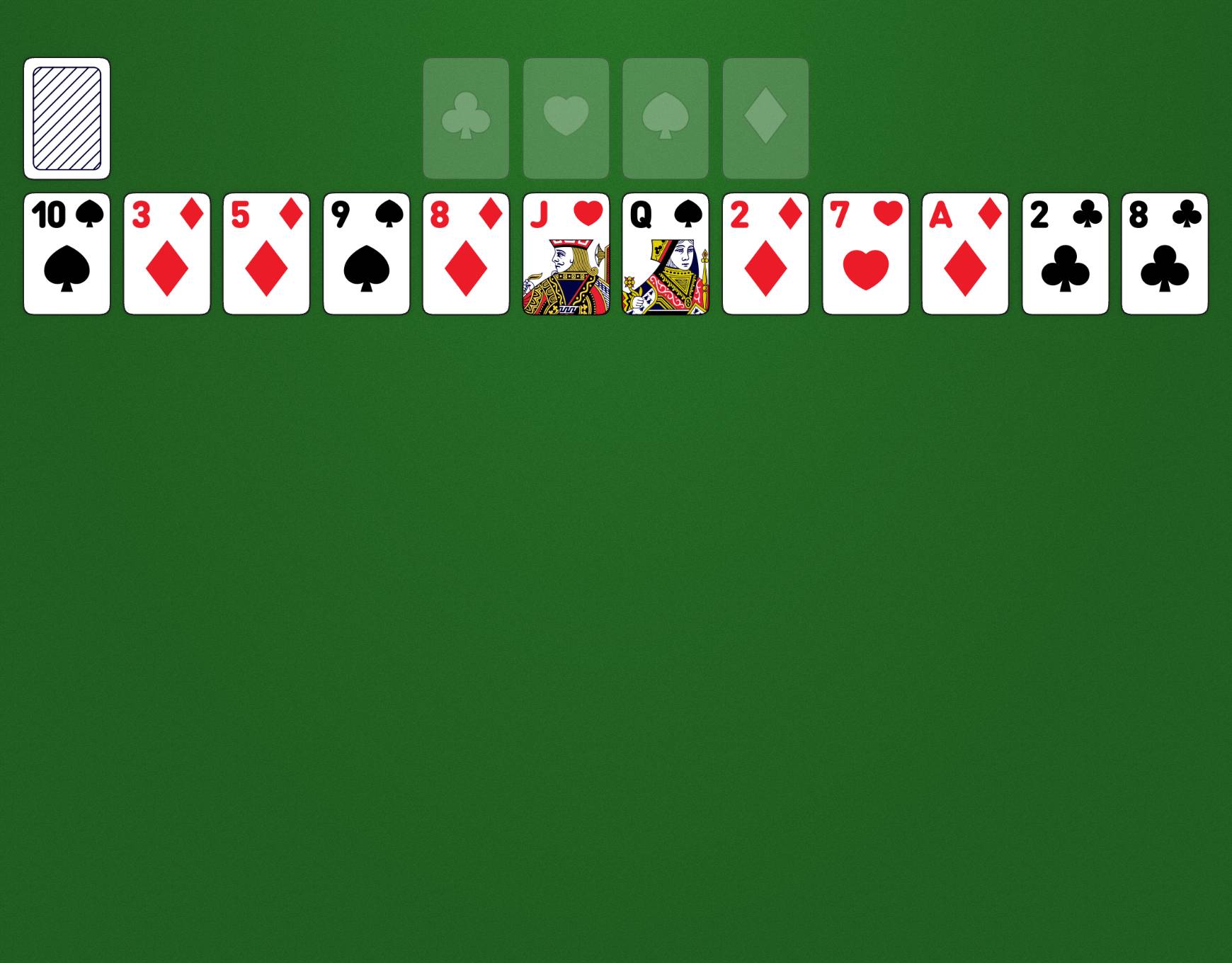
Eighteens Solitaire deals twelve cards face-up and asks you to clear them in specific combinations: pull a lone ace whenever one turns up, or gather a face card together with three number cards of different ranks that add up to eighteen. Every card you clear gets replaced from the stock, so the whole deck eventually cycles through those twelve spots. It's a tough one, with only a 10% chance of winning. It's played with a single deck, and luck decides almost everything.
Other pair-and-set games in the same family include Block Ten Solitaire, Simple Pairs Solitaire, and Fifteens Solitaire.
If you run into anything odd or have an idea that would make the game better, please contact me.
Have fun!
How to play Eighteens Solitaire
Layout:
4 foundation piles: Cleared cards are arranged here.
12 tableau piles: Each pile holds a single face-up card. Clear a lone ace on its own, or a face card together with three number cards of different ranks that add up to eighteen. Emptied piles are refilled automatically from the stock. At the start of the game, each pile is dealt one card, face-up.
Stock: Its only job is to refill empty tableau spaces. There are no redeals.
Foundation:
There are four foundation piles on which cleared cards are arranged.
Tableau:
There are twelve tableau piles of one card each. Every card is dealt face-up.
No building is allowed on the tableau.
An ace can be cleared on its own. A face card (jack, queen, or king) can be cleared together with three number cards of different ranks that add up to eighteen — a king with a 10, a 6, and a 2, for example.
Each time a pile is emptied, it's immediately refilled with the top card of the stock. Once the stock is empty, empty spots stay empty.
Stock:
The stock is made up of leftover cards.
Cards can't be dealt from the stock by hand. Instead, its top card automatically fills each tableau spot the moment a card or set is cleared. There's only one pass through the stock.


