Play Fifteen Rush Solitaire Online for Free (No Signup Required)
Clear a Klondike-style staircase not by building runs but by pairing cards that add up to fifteen or match in rank. Simple, single deck, 85% win rate.
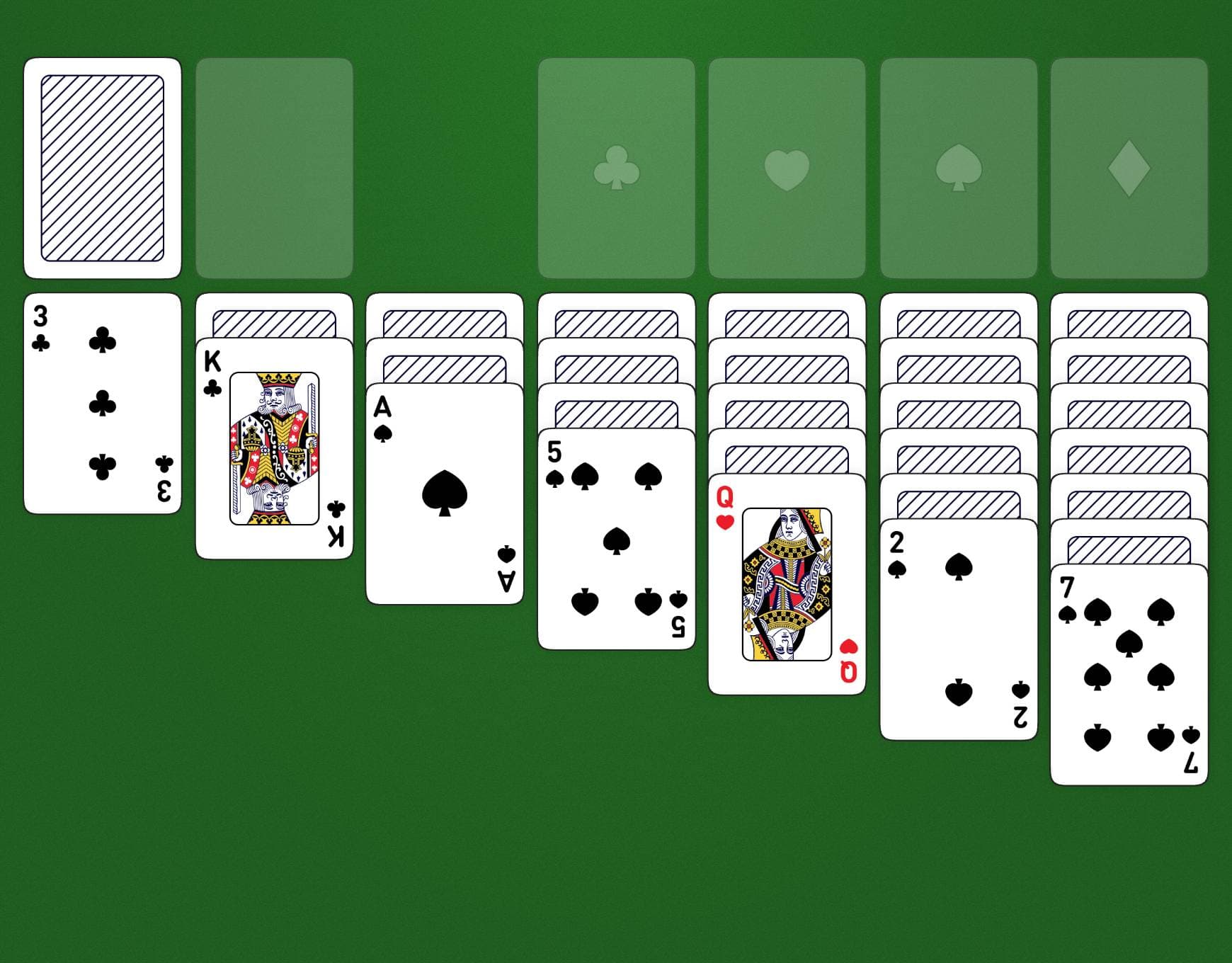
Fifteen Rush Solitaire borrows its tableau straight from Solitaire: seven piles built in a staircase, one card in the first and seven in the last, with only the top card of each pile turned face-up. But the goal here isn't to build suited runs. Instead, you clear the board by pairing up cards, either two that add up to fifteen or two of matching rank, and sending them off together.
This is a simple game: play enough hands and about 85% of them end in a win. It's a single deck, and skill carries most of that result, with a little luck filling in the rest.
Games in the same family include Fifteens Solitaire and Doublet Cell Solitaire, plus older cousins like Fourteen Demons and The Ides of March.
If you run into anything odd or have an idea that would make the game better, please contact me.
Enjoy playing!
How to play Fifteen Rush Solitaire
Layout:
7 tableau piles: Dealt in a staircase, one card in the first pile, two in the second, and so on up to seven in the last. Only the top card of each pile is face-up.
Stock: Click to deal three cards at a time to the waste. Redeals are unlimited.
Waste: The top card is available for pairing.
Foundation:
There are four foundation piles, where matched cards are stacked once they're cleared from play.
Tableau:
There are seven tableau piles, with one card in the first, two in the second, three in the third, and so on. The top card in each pile is dealt face-up, while the rest are dealt face-down.
No building is allowed on the tableau; cards are only ever removed, never stacked.
Cards on the tableau that are not covered by another card are free to play, matched against the top waste card or another exposed tableau card to clear both at once.
When a tableau pile is emptied, it is refilled at once with the top card of the stock. Once the stock is empty, the top card of the waste fills it instead, and when both are empty, the spot stays empty. You can't place a card into an empty spot yourself.
Stock and waste:
There is one waste pile, and the remaining cards make up the stock.
Clicking the stock deals three cards at a time to the waste. You can pass through the stock as many times as you like; if fewer than three cards are left at the end of a pass, only those are dealt. Once you reach the end, the waste becomes the new stock for another pass.
The top waste card is ready for pairing.


